



How to Select the Right Ultra-Low Temperature Bearing
Ultra-low temperature (ULT) bearings, operating in environments typically ranging from -60°C to -269°C (liquid nitrogen temperature) and below, are critical components in cryogenic systems. These conditions impose unique challenges not found in standard bearing applications. Selecting the correct bearing is not merely an exercise in specification; it is fundamental to ensuring system reliability, efficiency, and safety. Failure modes in cryogenic environments are severe and often catastrophic, making informed selection paramount.
This guide outlines the key engineering considerations and selection criteria for ultra-low temperature bearings.
1. Understand the Application and Operating Environment
The first step is a thorough analysis of the operational demands:
- Temperature Range: Define the minimum, maximum, and steady-state operating temperatures.
- Coolant Media: Is it liquid nitrogen (LN2, -196°C), liquid helium (LHe, -269°C), liquid oxygen, or gaseous cryogen? The media affects material compatibility and lubrication strategy.
- Load Conditions: Determine the magnitude and direction (radial, axial, combined) of static and dynamic loads.
- Speed (RPM): High-speed vs. low-speed operation dictates design priorities.
- Required Lifespan & Maintenance Accessibility: Is it for a continuously operating industrial compressor or a sealed, maintenance-free space application?
- Atmosphere: Inert, oxidizing, or vacuum? This influences material and lubricant choices.
2. Core Selection Criteria
A. Bearing Material
Standard bearing steels become brittle and lose toughness below their ductile-to-brittle transition temperature.
- Martensitic Stainless Steels (e.g., AISI 440C): A common choice for temperatures down to about -150°C. They offer good corrosion resistance and wear characteristics but may not suffice for more extreme temperatures.
- Austenitic Stainless Steels (e.g., AISI 304, 316): Retain excellent toughness and ductility at cryogenic temperatures due to their face-centered cubic (FCC) structure. Their drawback is lower hardness and wear resistance compared to hardened bearing steels.
- High-Nickel Alloys (e.g., A286, Inconel 718): Used for the most demanding applications (near absolute zero). They maintain high strength and toughness, but are significantly more expensive.
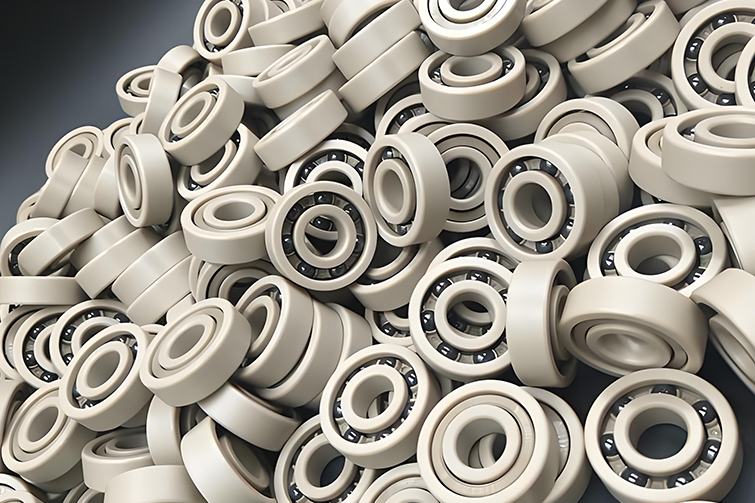
- Ceramics (Silicon Nitride, Si3N4): A premier choice for extreme ULT applications.Advantages: Extremely high hardness, low thermal expansion, electrically insulating, lightweight, and most importantly, they do not suffer from brittle fracture at cryogenic temperatures. They can run with significantly less or even no lubrication.Disadvantages: Higher cost and susceptibility to tensile stress concentrations (requires careful design).
B. Lubrication
This is the most critical and challenging aspect of ULT bearing design. Conventional oils and greases freeze, become highly viscous, or lose their lubricity.
- Solid Film Lubricants: The default solution for sealed or non-maintained ULT bearings.PTFE (Teflon) or MoS2 (Molybdenum Disulfide) Coatings: Sputtered or bonded to raceways and rolling elements. Provide a thin, dry lubricating film. Performance life is finite and depends on load and speed.Polymer-Based Retainers: Self-lubricating cages made from PTFE composites can provide both lubrication and cage function.
- Cryogenic Fluid Lubrication: In some systems, the process fluid itself (e.g., liquid oxygen, gaseous helium) can be used as a lubricant. This requires specialized bearing designs (e.g., hydrodynamic or hydrostatic bearings) and careful material compatibility checks (especially for oxygen service, where materials must be non-reactive).
- Specialized Greases: A few specially formulated perfluoropolyether (PFPE)-based greases can function at temperatures down to -80°C, but their application below that is very limited.
C. Internal Design and Clearance
- Internal Clearance: Bearings contract significantly at ULT. A standard "C0" or "CN" clearance will become a preload at operating temperature, leading to excessive heat generation and rapid failure. It is essential to select a bearing with a much larger-than-standard radial internal clearance (e.g., C4, C5, or specialized cryogenic clearance).
- Retainer/Cage Design: Must accommodate differential thermal contraction.Materials: Phenolic, PTFE, bronze, or stainless steel are common. Polymer cages offer self-lubrication but have temperature limits.Design: Machined, guided cages are preferred over stamped designs for stability. "Full-Complement" bearings (no cage) can handle higher loads but at the expense of reduced maximum speed.
D. Bearing Type
- Ball Bearings (Deep Groove, Angular Contact): Most common for ULT. Angular contact bearings are excellent for handling combined loads. They generally have lower friction than roller bearings.
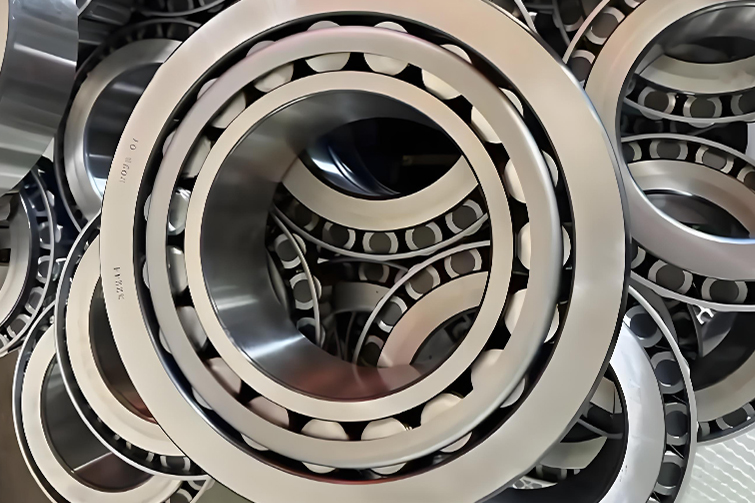
- Roller Bearings (Cylindrical, Tapered): Used for higher radial load capacity. However, their line contact can generate more friction and heat, and managing internal clearance is more critical.
3. Special Considerations and Best Practices
- Heat Management: Frictional heat generation, even if small, is problematic as it directly boils off costly cryogens. Strive for the most efficient bearing-lubrication combination.
- Thermal Insulation/Isolation: Use thermal breaks (e.g., G10 fiberglass spacers) in the bearing housing to minimize heat leak from the ambient environment into the cold zone.
- Tolerance and Fit: Account for material shrinkage. Housing and shaft fits must be calculated for the operating temperature to avoid loss of preload or, conversely, excessive stress.
- Cleanliness and Handling: Absolute cleanliness during assembly is vital. Contaminants (dust, moisture) will freeze solid, causing immediate damage.
- Testing and Qualification: For mission-critical applications (aerospace, medical MRI), insist on vendor-provided test data or conduct qualification testing under simulated operational conditions.
Conclusion
Selecting an ultra-low temperature bearing requires a holistic, system-level approach that prioritizes material science, tribology, and thermal engineering. There is rarely an "off-the-shelf" perfect solution. The optimal choice is a careful balance of:
- Material (often ceramic or high-nickel alloy),
- Lubrication (typically solid film),
- Internal Geometry (significantly increased clearance),
- Ancillary Design (fits, insulation, cleanliness).
Collaborating early with specialized bearing manufacturers who have proven experience in cryogenics is strongly recommended. By methodically addressing each of the criteria outlined above, engineers can ensure their cryogenic systems achieve the required performance, longevity, and reliability.