



The Diverse Applications of Magnetic Levitation Bearings
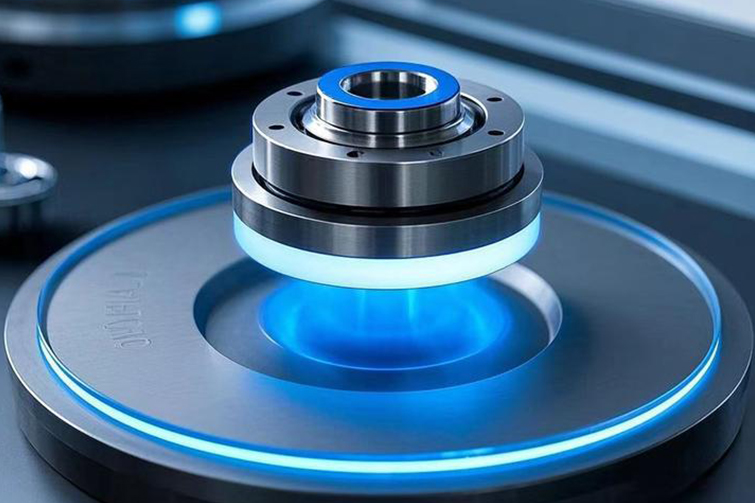
Magnetic Levitation (Maglev) bearings, a revolutionary technology that suspends rotating shafts or moving objects without physical contact using magnetic forces, have transitioned from laboratory curiosities to critical components in high-performance industries. By eliminating mechanical friction and wear, they offer unparalleled advantages in speed, efficiency, precision, and maintenance. This article explores the primary fields where maglev bearings are making a significant impact.
1. High-Speed Turbomachinery and Energy Systems
This is one of the most established and critical application areas.
- Turbo-Molecular Pumps and Compressors: In semiconductor manufacturing and high-vacuum environments, maglev bearings enable pumps to achieve extremely high rotational speeds (often over 40,000 RPM) with minimal vibration and no lubricant contamination, which is crucial for cleanroom processes.
- Gas Turbines and Compressors: In oil & gas and power generation, maglev bearings are used in pipeline compressors and small-scale power turbines. They enhance efficiency, reduce energy loss from friction, allow for oil-free operation, and enable active monitoring of rotor dynamics.
- Flywheel Energy Storage Systems (FESS): Maglev bearings are ideal for FESS, where a rotor spins at very high speeds in a vacuum to store kinetic energy. Contactless levitation drastically reduces energy loss, allowing for high round-trip efficiency and long-term energy storage.
2. Precision Manufacturing and Machine Tools
The need for extreme precision and high-speed spindles drives adoption here.
- High-Speed Machine Tool Spindles: Maglev bearings in CNC machining centers allow spindles to rotate at speeds exceeding 100,000 RPM with exceptional rotational accuracy. This enables superior surface finishes, higher productivity, and the ability to machine hard materials like composites and ceramics.
- Precision Grinding and Milling: The absence of friction and wear ensures consistent performance over time, critical for micron-level tolerances in manufacturing optical lenses, medical components, and aerospace parts.
3. Medical Technology and Life Sciences
The requirements for cleanliness, reliability, and quiet operation make maglev bearings a perfect fit.
- Blood Pumps and Ventricular Assist Devices (VADs): In implantable and extracorporeal blood pumps, maglev bearings are revolutionary. They create a contactless, frictionless suspension for the impeller, minimizing hemolysis (blood cell damage), reducing clot risk, and significantly improving device longevity and patient safety compared to conventional mechanical bearings.
- Centrifuges: In laboratory and diagnostic centrifuges, maglev technology allows for higher speeds, quieter operation, and reduced sample disturbance due to superior vibration control.
4. Aerospace and Defense
The extreme demands of aerospace applications leverage the unique benefits of maglev systems.
- Aircraft Environmental Control Systems (ECS) and Fuel Pumps: Maglev bearings in air-cycle machines and pumps contribute to lighter, more efficient, and maintenance-free subsystems, improving aircraft performance and reliability.
- Spacecraft Attitude Control Wheels (Reaction Wheels): These devices control satellite orientation. Maglev bearings offer virtually frictionless operation, precise torque control, and exceptional longevity—critical for missions lasting years in space without possibility of maintenance.
- Advanced Propulsion Systems: Research is ongoing into using maglev bearings in aircraft engines and cryogenic rocket engine turbo-pumps to push the boundaries of speed and efficiency.
5. Transportation
While large-scale maglev trains use electrodynamic suspension (EDS) or electromagnetic suspension (EMS) for vehicle levitation, the principle is closely related.
- Maglev Trains: The most iconic application, where the entire vehicle is levitated above a guideway, enabling ultra-high speeds (over 600 km/h), smooth rides, and low noise due to the absence of wheel-rail contact.
- High-Speed Drives and Transmissions: Within advanced transportation systems, compact maglev bearings can be used for auxiliary drives and generators.
6. Specialized Research and Scientific Instruments
- Particle Accelerators and Ultra-High Vacuum Systems: Maglev turbo-pumps are standard for creating extreme vacuums. Furthermore, maglev principles are explored for frictionless support within accelerator beamlines.
- Advanced Simulators and Test Rigs: Where ultra-smooth, low-disturbance rotational motion is required for calibrating inertial sensors or testing materials.
Conclusion
Magnetic levitation bearings are no longer a technology of the future; they are actively enabling breakthroughs across a spectrum of high-tech industries. From safeguarding human life in medical implants to pushing the limits of manufacturing precision, from storing clean energy to propelling the fastest trains, their core benefits of contactless operation, negligible wear, high-speed capability, and precise active control make them indispensable. As costs decrease and control algorithms advance, their application horizon is set to expand even further, solidifying their role as a cornerstone of advanced mechanical engineering.